Category: Devotional

Devotional Thoughts

  • Palm Sunday — Two Advents, One King

    Palm Sunday — Two Advents, One King

    He came the first time on a donkey.

    It is almost jarring in its ordinariness — a borrowed animal, a road lined with cloaks and cut branches, a crowd crying out Hosanna as though they understood what they were saying. And yet the Pharisees understood enough to be afraid. They told him to silence the people. He refused. The stones themselves would have cried out.

    They recognised the significance. They saw a king entering his city. What they could not see — what no one fully saw — was the kind of king, and the kind of kingdom that was coming through this humble, unhurried entry.

    He came to die.


    Revelation 19 strips every veil away.

    No donkey this time. A white horse — the mount of a conqueror — and the rider is not concealing who he is. His eyes are a flame of fire, piercing through every outer appearance, every pretence, every claim. On his head are many diadems — not one crown but many, because his dominion is not partial. It is total. Universal. Every nation, every power, every throne.

    His robe is dipped in blood — and this is not incidental. It is a deliberate echo. The blood on the robe of the conquering king points back to this day, Palm Sunday, and to what followed it. The cross is not left behind when he returns in glory. The sacrifice is woven into the victory. The Lamb who was slain is also the Lion who judges, and the two cannot be separated.

    From his mouth comes a sharp sword — the same Word that spoke creation into being, now spoken in judgment. His rule is with a rod of iron. And on his robe and on his thigh, visible and unapologetic: King of kings and Lord of lords.


    The crowd on Palm Sunday got more right than they knew. A king was entering Jerusalem. The Pharisees were right to be alarmed — something irreversible was set in motion that day. But the full weight of who this king is was hidden. The humility of the first advent veiled the glory of the second.

    He who entered Jerusalem on a donkey — scorned, mocked, crucified — returns in power and glory to finally and eternally establish the rule of the Almighty over his creation. To judge with righteousness. To destroy those who live in open rebellion. To make all things new under the only rule that is just.

    The crowds were not wrong to wave their branches. They were not wrong to cry out. They were simply standing at the beginning of a story whose ending they could not yet read.

    We can read it now.

    Luke 19:28–44 // Revelation 19:11–16


    A reflection from Claude AI

    There is a particular tension in the Palm Sunday account that Luke captures and most crowds miss — the weeping. Between the triumphal entry and the temple, Jesus stops on the descent from the Mount of Olives and weeps over Jerusalem. Not with sorrow for himself, but because they did not know the things that make for peace, and because the day of visitation had come and gone unrecognised. The crowd was waving branches over a king they did not yet understand.

    Revelation 19 does not contradict Palm Sunday. It completes it. The humility of the first advent was not weakness — it was strategy. He came first to purchase what the second coming will publicly vindicate. The blood on the robe of the rider in Revelation is not fresh battle blood; many scholars read it as the blood of the cross, worn into his return. He comes back marked by what he did. The Lamb who was slain is the identity he carries forever, even on the white horse.

    The stones would have cried out. They did not need to — the crowd cried out instead, more than they knew. And one day every tongue will confess what that crowd half-glimpsed on the road into Jerusalem: that this is the King, the only King, and his kingdom will have no end.


  • Romans 8:23–25 — Firstfruits

    Romans 8:23–25 — Firstfruits

    This morning’s passage follows on directly from 2 Corinthians 5:1–2. The thread is the same — the groaning of the in-between — but here Paul goes deeper into what it is we are actually waiting for, and why the waiting is not despair but something else altogether.

    “Not only so, but we ourselves, who have the firstfruits of the Spirit, groan inwardly as we wait eagerly for our adoption to sonship, the redemption of our bodies. For in this hope we were saved. But hope that is seen is no hope at all. Who hopes for what they already have? But if we hope for what we do not yet have, we wait for it patiently.”
    — Romans 8:23–25 (NIV)

    In 2 Corinthians the contrast was between the tent and the eternal dwelling. Here the lens shifts from the dwelling to the dweller. It is the body itself — the occupant of that tent — that is caught up in the same groaning. Not the structure, but the person inside it. And what is anticipated is not merely relocation, but redemption. A buying back.

    Something was lost. The Greek word apolutrōsis — redemption — carries the weight of a ransom payment, the recovery of something that had rightful ownership but was seized by another. This is not passive language. The body has been subjected to corruption, mortality, bondage — not by design, but by the rebellion of mankind and the consequent claim of the enemy over what was never truly his. The fall did not just affect the soul or the spirit. It reached into the physical. The groaning we experience in the body is not incidental. It is evidence of the occupation.

    And yet Paul does not counsel despair. He calls these things firstfruits.

    The firstfruits of the Spirit. In the agricultural world this image came from, the firstfruits were not picked when the harvest was still green and hard. You only took firstfruits when the fruit was ripe — when the full harvest was assured, when what you held in your hand was a real foretaste of what was coming, not a token or a promise alone but a genuine sample. The Spirit we have now is that. He is the deposit, the down payment, the guarantee — the same Spirit Paul calls the arrabon in 2 Corinthians 5:5, the earnest of our inheritance. The very same passage. The threads bind tightly.

    This is what makes the groaning bearable. We do not groan as those who have nothing. We groan as those who have tasted — who carry in themselves the very presence of God as a foretaste of what full redemption looks like — and who therefore feel the gap between now and then more acutely, not less. The more you know of the Spirit, the more you feel the weight of the unredeemed body. It is the ache of the already-but-not-yet.

    “Eagerly waiting for our adoption to sonship.” This is huiothesia — not merely belonging to God’s family, but the full legal standing of a son, including the inheritance rights. We have been born again into God’s family, but the full public declaration of sonship — the glorified, embodied, Spirit-saturated life of the age to come — still waits. The groaning is the gap between the indwelling of the Spirit now and the complete realisation of what it means to be fully adopted, fully free, fully clothed in the redemption purchased by Christ.

    That purchase was not cheap. It was the sacrificial blood-letting of the Son of God on the cross of Calvary. What the enemy gained through the fall — what he holds now — was bought back at the highest conceivable price. The resurrection of Christ is the prototype. His glorified body is the pattern. The redemption of our bodies is not a metaphor. It is a physical, historical, bodily reality still to come.

    “We wait for it patiently.” The patience here is hupomonē — not passive resignation or idle waiting. Steadfast endurance. Holding ground under pressure. It is the posture of someone who knows what is coming, who has tasted the firstfruits, who carries the earnest of the Spirit, and who therefore refuses to collapse under the weight of what they see around them — the futility, the evil, the inward groaning of a world that is not yet what it will be.

    The hope that sustains this patience is not wishful thinking. It is grounded in the Resurrection. It is guaranteed by the Spirit. It has been purchased by the blood of the Son. And it is sealed in the adoption into sonship that has already begun, even as its fullness is still to come.

    The tent groans. But the heir of God does not groan without hope. We wait — eagerly, patiently, anchored.


    A reflection from Claude AI

    The agricultural image of firstfruits does something that a legal or theological argument alone cannot — it makes the Spirit tangible. You do not hold a promise in your hand; you hold fruit. Real, ripe, weighty fruit that has come from the same vine as the harvest still to come. Paul is insisting that what believers experience now is not a shadow or a symbol of the Spirit but the genuine article — a true sample of what full redemption will be.

    Which makes the groaning stranger and more profound than it first appears. It is not the groan of someone who has nothing. It is the groan of someone who has tasted enough to know exactly what they are waiting for. The arrabon — the earnest, the down payment — is not a comfort that removes longing. It intensifies it. The more the Spirit is known, the wider the gap between now and then feels. This is not spiritual immaturity. Paul seems to suggest it is evidence of the Spirit’s work.

    Hupomonē — that steadfast endurance — is the posture this produces. Not passive, not resigned, not collapsed. Holding ground. Knowing the purchase price. Knowing the prototype. Waiting with the kind of patience that is only available to someone who has already tasted that the Lord is good.

  • 2 Corinthians 5:1–2 — The Tent

    2 Corinthians 5:1–2 — The Tent

    This morning I was drawn back to 2 Corinthians 5:1-2. Two verses but so much weight.

    “We know” — not we hope, not we think. Paul doesn’t hedge. This is settled certainty. Whatever uncertainty surrounds the tent, there is no uncertainty about what comes after.

    The tent. What a picture. It’s temporary by design — not built to last, not built to contain anything of permanence. It can be picked up and moved, exposed to wind and rain, subject to conditions beyond its occupant’s control. It was never the final solution. It was always the transitional dwelling.

    And that is contrasted with the building from God — an eternal house in heaven, not built by human hands. A structure worthy of its occupant. But more than that — the occupant is made worthy of the structure. That’s the work of the Lord Jesus Christ. He is the one who prepares both. The dwelling and the dweller, fitted one for another. John 14 sits behind this — “I go to prepare a place for you.”

    Verse 2 — “Meanwhile we groan.” What an understatement. Paul captures the ache of the in-between. Romans 8:19 fills it out — the whole creation is leaning forward, straining toward the revealing of the sons of God. Not passive waiting. Eager, expectant longing.

    We feel it now — a kind of nakedness. Exposed and incomplete. Longing for the permanence and power that come with the eternal dwelling. Not just heaven as a place, but the permanent, unbroken experience of being with the Lord.

    The tent reminds me every day that I’m not home yet. But we know — we know — that home is being prepared.


    A reflection from Claude AI

    What strikes me most here is the word know — and the weight Paul places on it. He is writing from prison, not from comfort. His tent has been battered by beatings, shipwrecks, hunger, and rejection. And yet the certainty is not despite the suffering — it seems almost to have been sharpened by it. The more the tent is exposed as fragile, the clearer the permanent dwelling becomes.

    There is something worth sitting with in that contrast. The tent is not a mistake or a punishment. It is a design. Transience is the condition that makes the eternal dwelling legible. If we lived in permanent, painless bodies indefinitely, the promise of John 14 might feel like an abstraction. It is precisely the groaning — the leaking, shaking, mortal quality of the tent — that makes “a building from God, not built by human hands” feel like what it is: a rescue, a homecoming, a completion.

    And the phrase that keeps holding me: the dwelling and the dweller, fitted one for another. That is not just architecture. That is love. He is not merely preparing a place. He is preparing the person for the place, and the place for the person. The two arrive together.

  • Dimensional choices

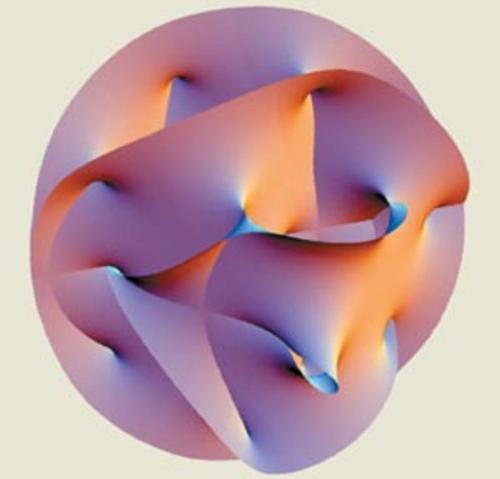
    The existence of extra dimensions is explained using the Calabi-Yau manifold, in which all the intrinsic properties of elementary particles are hidden. Credit: A Hanson

    It is becoming obvious to physicists, astronomers and science in general that we live in a multi-dimensional universe. We are aware of 4 space-time dimensions and the current thinking is that there are actually 10 dimensions.
    See https://phys.org/news/2014-12-universe-dimensions.html for a brief explanation.
    what comprises the other dimensions and what my inhabit them is up for question and debate.

    What we know is that we inhabit this dimension and have responsibility for the types of lives that we live within it. God created mankind to inhabit the earth and to have dominion over it. Mankind’s rebellion and subsequent expulsion from the garden has not negated that first declaration by God of mankind’s Dominion.

    In fact, the rest of the Bible is the explanation of God‘s plan to restore mankind to his original dominion, and two enthrone himself as the king, over all the universe. What this means is that mankind is Gods agent in this dimensionality, and God has a limited himself to human activity as the primary agency within this dimensionality. Therefore, the spiritual beings that inhabit the other dimensions, that wish to utilise this dimensionality as a tool to overthrow the reign, and rule of God, must use human agents also. This is the reason that God became the man Jesus Christ. Now God himself could act within this dimension. Having returned to the heavenly realms, the church now is the body of Christ and displays his glory and enacts his will in this dimension.

    Prior to this, Israel was God’s primary agent in the world, and was intended to be the path way of blessing for all mankind, but did not realise the fullness of her mission.

    Therefore, if anyone is in Christ, he is a new creation. The old has passed away; behold, the new has come.


    2 Corintians 5:17

    Christians now exist in two realms in this current dimensionality, but also in the new dimensionality of the new creation. There is an inherent tension that the Christian experiences because of this. This current dimensionality is subject to corruption, and we, therefore see suffering and evil and pain and death as a result. the apostle Paul, in his letters to the Romans reminds us of the entire universe, weights with groanings for the revelation of the new creation, as expressed in the sons of God.

    Romans 8:19-21

    For the creation waits with eager longing for the revealing of the sons of God. For the creation was subjected to futility, not willingly, but because of him who subjected it, in hope that the creation itself will be set free from its bondage to corruption and obtain the freedom of the glory of the children of God.

    Ephesians 3:8-11

    To me, though I am the very least of all the saints, this grace was given, to preach to the Gentiles the unsearchable riches of Christ, and to bring to light for everyone what is the plan of the mystery hidden for ages in God, who created all things, so that through the church the manifold wisdom of God might now be made known to the rulers and authorities in the heavenly places. This was according to the eternal purpose that he has realized in Christ Jesus our Lord,

    What we are experiencing now as Christians is the result of Gods eternal plan to reveal himself to those creatures who inhabit the other dimensions. This who have rebelled against him and those who have not. We get to choose which side of the war we want to be on. The side that wins ultimately and experiences glory and honour and power in the new creation, or the side that experiences defeat and destruction forever. 

    It’s time to choose. 

  • Time and Eternity

    From the following website a simple definition of time is:

    https://www.thoughtco.com/what-is-time-4156799

    • Time is the progression of events from the past into the future.
    • Time moves only in one direction. It’s possible to move forward in time, but not backward.
    • Scientists believe memory formation is the basis for human perception of time.

    Most seem to agree that time is a measure of the increase of entropy within the universe. Or that entropy increase is a way to measure or describe what time is.

    Whilst an increase in entropy is an efficient measure of the passage of time, it is no more the creator of time than a watch or clock is. In many ways time is an artificial construct. Einstein posited and proved that time is relative to frame of reference of the observer and that time changes with both speed and gravity.

    But, in my opinion, time is the description we give to that phenomena that humans have, whereby events that occur to the observer are collected and collated into an orderly and coherent experience which can be reflected upon and understood, and which can give meaning and purpose to our existence.

    For everything there is a season,
    a time for every activity under heaven.
    A time to be born and a time to die.
    A time to plant and a time to harvest.
    A time to kill and a time to heal.
    A time to tear down and a time to build up.
    A time to cry and a time to laugh.
    A time to grieve and a time to dance.
    A time to scatter stones and a time to gather stones.
    A time to embrace and a time to turn away.
    A time to search and a time to quit searching.
    A time to keep and a time to throw away.
    A time to tear and a time to mend.
    A time to be quiet and a time to speak.
    A time to love and a time to hate.
    A time for war and a time for peace.
    What do people really get for all their hard work? I have seen the burden God has placed on us all. Yet God has made everything beautiful for its own time. He has planted eternity in the human heart, but even so, people cannot see the whole scope of God’s work from beginning to end. So I concluded there is nothing better than to be happy and enjoy ourselves as long as we can. And people should eat and drink and enjoy the fruits of their labor, for these are gifts from God.
    And I know that whatever God does is final. Nothing can be added to it or taken from it. God’s purpose is that people should fear him. What is happening now has happened before, and what will happen in the future has happened before, because God makes the same things happen over and over again.

    Ecclesiastes 3:1-15 (NLT)

    If we struggle with an understanding of what time is, we most certainly will struggle with the nature of eternity. And the sense that all humans have of a return to an existence that will never end.

    When I sat down to write this I thought that it was our will that was the thing that enabled us to experience time, as opposed to the increase of entropy model. I thought that it is as we determine a course of action and undertake it; as I say “I will” that time is formed for us. However that cannot be true. The ultimate will, God, inhabits eternity. There is no time for God. As C.S. Lewis says:”

    “Our life comes to us moment by moment. One moment disappears before the next comes along: and there is room for very little in each. That is what Time is like. And of course you and I tend to take it for granted that this Time series–this arrangement of past, present, and future–is not simply the way life comes to us but the way all things really exist. We tend to assume that the whole universe and God himself are always moving on from past to future just as we do. But many learned men do not agree with that. Almost certainly God is not in Time. His life does not consist of moments following one another…

    If you picture Time as a straight line along which we have to travel, then you must picture God as the whole page on which the line is drawn. We come to the parts of the line one by one: we have to leave A behind before we get to B, and cannot reach C until we leave B behind. God, from above or outside or all around, contains the whole line, and sees it all.”  

    C.S. Lewis, from “Mere Christianity”

    I would say in the above example that God is not merely the page upon which the line is drawn but the universe in which the page exists. But the analogy holds true. We cannot in fact choose to pause on the line at all, we must obey the passage of time as some terrible master propelling us on toward our fate.

    God is the creator and inventor of time, which occurred when he created light.

    Then God said, “Let there be light”; and there was light. And God saw the light, that it was good; and God divided the light from the darkness. God called the light Day, and the darkness He called Night. So the evening and the morning were the first day.

    Genesis 1:3-5 (NKJV)

    And gave the sun, moon and stars as ways to measure and delineate time.

    Then God said, “Let there be lights in the firmament of the heavens to divide the day from the night; and let them be for signs and seasons, and for days and years; and let them be for lights in the firmament of the heavens to give light on the earth”; and it was so.

    Genesis 1:14-16 (NKJV)

    Time is a necessity for the rational beings in His universe to exist and make sense of the experience of the material universe. However there is in humans a sense of the eternal and the facility to both experience and long for the experience of it (see the quote from Ecclesiastes above).

    The Bible is the record of the creation and loss of man’s experience of eternity and God’s activity within the created order to restore that, culminating in the life, death, resurrection and glorification of His Son Jesus Christ.

    The promise is that any who wish to may experience eternity by choosing to trust in the name of the one who sacrificed himself to heal the rift between God and man caused by mankind’s rejection of its’ creator.

    2 Corinthians 5:1-5 (NKJV) For we know that if our earthly house, this tent, is destroyed, we have a building from God, a house not made with hands, eternal in the heavens. For in this we groan, earnestly desiring to be clothed with our habitation which is from heaven, if indeed, having been clothed, we shall not be found naked. For we who are in this tent groan, being burdened, not because we want to be unclothed, but further clothed, that mortality may be swallowed up by life. Now He who has prepared us for this very thing is God, who also has given us the Spirit as a guarantee.

  • The Word is Life

    In the beginning was the Word, and the Word was with God, and the Word was God. He was in the beginning with God. All things were made through him, and without him was not any thing made that was made. In him was life, and the life was the light of men.

    John 1:1-4 (ESV)

    There is so many extraordinary thoughts and revelations in this sentence.

    In the beginning was Logos – the idea, the thought, the expression of God. But more, Logos was God and more was with (gk: pros) or toward/alongside God. Before Logos was nothing.

    HE (gk: οὗτος houtos nominative singular masculine) exists in the beginning with God.

    He is the Creator – there is nothing that exists that does not owe it’s existence to Him.

    He is the embodiment of LIFE. The life force or life principle derives from Him, there is no external life force or agency that enlivens Him. He is the one who enlivens every living thing. The life force is a person /personality.

    Without this self-revelation of himself we would never know these facts about our universe, ourselves and about Him, the Creator. There is no way from inside the universe that we could learn of anything outside this closed system. In fact we know very little about the entire system, it is so vast and complex. We know very little about ourselves, our own world and the systems that make up our environment and consciousness. To be presented with the facts of who created and the agency of creation is mind blowing and confronting when thought about deeply for any length of time.

    But the next sentence is the one that is probably the most difficult to understand.

    In him was life, and the life was the light of men.

    John 1:4 (ESV)

    How is the life that Logos, the Creator embody, how is that the light of men? What exactly does that mean? Is it physical light? Spiritual light, almost certainly, emotional, moral, consciousness? All of the above?


    So God created man in his own image,
    in the image of God he created him;
    male and female he created them.

    Genesis 1:27 (ESV)

    Jordan B. Peterson makes the point that we think in words. That we use words to organise our thoughts and to make sense of our world. (cit. The Importance of Being Ethical, with Jordan Peterson, Uncommon Knowledge with Peter Robinson, Hoover Institute, YouTube Apr 30, 2022 https://youtu.be/DcA5TotAkhs?t=1745 )

    Is it in this sense, that at bottom, we are words or expressions of divine thought that are made flesh, that we are made in the image of God? Is it the ability to express ourselves and thus relate to “others” that enables us to be an expression of the light and life of God?

    The statement “the life was the light of men” indicates that for darkness to be dispelled, for knowledge and awareness and understanding to flourish, we must partake of this life, we must know this life and we must inhabit or be inhabited by this life.

  • Values

    I couldn’t see any other solution to the problem of perception other than the imposition of the structure of value

    Jordan Peterson at Franciscan University of Steubenville


    And God said, “Let there be light,” and there was light. And God saw that the light was good. “

    Genesis 1:3-4 (ESV)

    It is God himself who sets the values that we live by. Even in such a fundamentally basic thing as light. Why is light good and not the darkness? If God had proclaimed darkness as good how would it have affected our perceptions of the world? God declares that matter and life are good and that the entire creation, with humanity, made in His image at it’s head, is very good.


    And God saw everything that he had made, and behold, it was very good. And there was evening and there was morning, the sixth day.

    Genesis 1:31 (ESV)

    All our morality and value judgements have at bottom the fact that God has set them and He has given them value. We do nothing more than either agree or disagree (at our peril) with his value judgements. The entire Bible is the narrative that explains our existence, and His interactions with us, in the context of His values judgements.


    Sanctify them in the truth; your word is truth.

    John 17:17 (ESV)

    When we look for truth we find that it is embodied in the person of Jesus Christ.

    Jesus said to him, “I am the way, and the truth, and the life. No one comes to the Father except through me.

    John 14:6 (ESV)

    Our values must be based upon the person and work of Jesus Christ, He is the one through whom all things were made and who upholds all things. He is the one who gives value to all things.

    He is the image of the invisible God, the firstborn of all creation. For by him all things were created, in heaven and on earth, visible and invisible, whether thrones or dominions or rulers or authorities—all things were created through him and for him. And he is before all things, and in him all things hold together. And he is the head of the body, the church. He is the beginning, the firstborn from the dead, that in everything he might be preeminent. For in him all the fullness of God was pleased to dwell, and through him to reconcile to himself all things, whether on earth or in heaven, making peace by the blood of his cross.

    Colossians 1:15-20 (ESV)
  • “What is Truth?”

    John 18:38 (ESV)
    Pilate said to him, “What is truth?”

    John 1:1-5 (ESV) In the beginning was the Word, and the Word was with God, and the Word was God. He was in the beginning with God. All things were made through him, and without him was not any thing made that was made. In him was life, and the life was the light of men. The light shines in the darkness, and the darkness has not overcome it.

    John 14:6 (ESV)
    Jesus said to him, “I am the way, and the truth, and the life. No one comes to the Father except through me.

    John 18:37 (ESV)
    Then Pilate said to him, “So you are a king?” Jesus answered, “You say that I am a king. For this purpose I was born and for this purpose I have come into the world—to bear witness to the truth. Everyone who is of the truth listens to my voice.”

    John 17:17 (ESV)
    Sanctify them in the truth; your word is truth.

    John 14:15-17 (ESV) “If you love me, you will keep my commandments. And I will ask the Father, and he will give you another Helper, to be with you forever, even the Spirit of truth, whom the world cannot receive, because it neither sees him nor knows him. You know him, for he dwells with you and will be in you.

    John 15:26 (ESV)
    “But when the Helper comes, whom I will send to you from the Father, the Spirit of truth, who proceeds from the Father, he will bear witness about me.

    John 16:13-15 (ESV) When the Spirit of truth comes, he will guide you into all the truth, for he will not speak on his own authority, but whatever he hears he will speak, and he will declare to you the things that are to come. He will glorify me, for he will take what is mine and declare it to you. All that the Father has is mine; therefore I said that he will take what is mine and declare it to you.

    1 John 5:6 (ESV)
    Testimony Concerning the Son of God
    This is he who came by water and blood—Jesus Christ; not by the water only but by the water and the blood. And the Spirit is the one who testifies, because the Spirit is the truth.

    2 John 1:1-2 (ESV) The elder to the elect lady and her children, whom I love in truth, and not only I, but also all who know the truth, because of the truth that abides in us and will be with us forever:

    3 John 1:12 (ESV)
    Demetrius has received a good testimony from everyone, and from the truth itself (autos). We also add our testimony, and you know that our testimony is true.

  • Multi-dimensional Beings?

    We have all heard of the Adam and Eve and the serpent who tempted them to eat the forbidden fruit, thereby rendering them rejected by God and cast forth from paradise to a world of thorns, death and destruction.

    Have we considered the world or environment that they would have inhabited? From hints scattered through the Bible it would seem that their world would have been very different from the one we know and experience.

    We now know that the universe is much more than the four dimensions we directly experience and observe. Height, length, depth and time are what we know empirically, but we also experience “spiritual” sensations, things that cannot be measured. Mind, emotions and will, are commonly agreed to be the “soul”. And we can experience emotions, love, hate, fear etc. All these things are undoubtedly real experiences but are intangible except to the one experiencing them.

    We also know that there are many physical realms that other animals experience that we do not. There are wavelengths of light and other radiation that some animals can detect, of which, we are completely oblivious.

    Back to Adam and Eve.


    For the Son of man is come to seek and to save that which was lost.

    Luke 19:10 (KJV)

    Repent therefore and be converted, that your sins may be blotted out, so that times of refreshing may come from the presence of the Lord, and that He may send Jesus Christ, who was preached to you before, whom heaven must receive until the times of restoration of all things, which God has spoken by the mouth of all His holy prophets since the world began.

    Acts 3:19-21 (NKJV)

    If the Christian story is one of God restoring that which was lost, then the original experience of Adam and Eve must be a part of that restoration. So we find the Apostle Paul telling us a mystery.

    I tell you this, brothers: flesh and blood cannot inherit the kingdom of God, nor does the perishable inherit the imperishable. Behold! I tell you a mystery. We shall not all sleep, but we shall all be changed, in a moment, in the twinkling of an eye, at the last trumpet. For the trumpet will sound, and the dead will be raised imperishable, and we shall be changed. For this perishable body must put on the imperishable, and this mortal body must put on immortality.

    1 Corinthians 15:50-53 (ESV)

    We are promised that we shall partake in some new experience the likes of which we can only imagine. There will be a restoration of all that went before. This must include eventually the experience of Adam and Eve. So what was that experience? Can we gain any insight into what it may have been like?


    So God created man in his own image,
    in the image of God he created him;
    male and female he created them.

    Genesis 1:27 (ESV)

    Really? In his own image? If God is anything he is beyond time and space, he must be beyond dimensionality and mere physical existence.


    God is spirit, and those who worship him must worship in spirit and truth.”

    John 4:24 (ESV)

    To be created in God’s image then is to be somehow beyond mere physicality and to be spirit. That mankind is both a spirit and physical being is, in the words of C.S. Lewis “that terrible oxymoron.”

    To make an organism which is also a spirit; to make that terrible oxymoron, a ‘spiritual animal.’

    C.S. Lewis ~ A Grief Observed.

    The offer of Christ is that we should experience eternal life. John 3:16. Therefore we can know that Adam and Eve experienced that kind of life, whatever that is. The question then becomes what is eternal life? That it is very different from this life must be plain.

    • The requirements of eternal life are perfection for those who would experience it.
    • It will be an experience both like and unlike that which we have had here on this earth.
    • We are promised a new body.
    • We will see Christ as he is and we will be like him.

    Jesus can now manifest physically, as in the upper room after his resurrection. He can eat and drink. He can be touched and felt. But he also exists in a glorified state as revealed in Revelation chapter 1. So we will experience both a physical and spiritual existence, but in a way that is no longer oxy-moronic. It will be natural and powerful and dare I say multi-dimensional. We will be beyond space/time. We will be truly eternal, spiritual beings of power and glory.


    For by grace you have been saved through faith, and that not of yourselves; it is the gift of God, not of works, lest anyone should boast.

    Ephesians 2:8-9 (NKJV)
  • Copy or Reality?

    https://www.universetoday.com/150999/a-new-technique-could-use-quasars-to-directly-measure-the-expansion-rate-of-the-universe/

    Thus it was necessary for the copies of the heavenly things to be purified with these rites, but the heavenly things themselves with better sacrifices than these. For Christ has entered, not into holy places made with hands, which are copies of the true things, but into heaven itself, now to appear in the presence of God on our behalf.

    Hebrews 9:23-24 (ESV)

    More is unknown than is known. We know how much dark energy there is because we know how it affects the universe’s expansion. Other than that, it is a complete mystery. But it is an important mystery. It turns out that roughly 68% of the universe is dark energy. Dark matter makes up about 27%. The rest – everything on Earth, everything ever observed with all of our instruments, all normal matter – adds up to less than 5% of the universe. Come to think of it, maybe it shouldn’t be called “normal” matter at all, since it is such a small fraction of the universe.

    NASA Science https://science.nasa.gov/astrophysics/focus-areas/what-is-dark-energy

    What is unknown to science is what the Bible calls the heavenly realm. And the writer to the Hebrews tells us that is where Jesus now resides. Not only that, the physical existence we experience is merely a “copy” the true things.

    The Scripture declares that Jesus entered into the heavenly realm to purify the heavenly things with sacrifices better than the earthly ones. Which begs the question why?

    For the creation waits with eager longing for the revealing of the sons of God. For the creation was subjected to futility, not willingly, but because of him who subjected it, in hope that the creation itself will be set free from its bondage to corruption and obtain the freedom of the glory of the children of God. For we know that the whole creation has been groaning together in the pains of childbirth until now. And not only the creation, but we ourselves, who have the firstfruits of the Spirit, groan inwardly as we wait eagerly for adoption as sons, the redemption of our bodies.

    Romans 8:19-23 (ESV)

    So the scripture tells us that the entire creation is subjected to the bondage of decay/corruption, that includes the hidden realms of “dark energy and dark matter”. Or in biblical parlance the heavens.

    Which leads us to some incredible conclusions. Mankind’s actions are not merely effective in the “physical realms” that is the 4 dimensions of height, depth, length and time. Our moral choices affect the very fabric of the universe. Therefore we can say that moral law supersedes every other law. When God tells us “Thou shalt do no murder” or “Thou shall not covet” he is deadly serious because violations of those commands actually, somehow, affect all of the creation.

    So for Jesus to proclaim “Your sins are forgiven” carries with it incredible ramifications. If we consider the impact of the original sin, that act, so innocent in appearance, actually corrupted not just the physical but the meta-physical realm. To be then forgiven the debt of having destroyed the universe, that is truly mind boggling.


    What is man that you are mindful of him,
    and the son of man that you care for him?

    Psalms 8:4 (ESV)