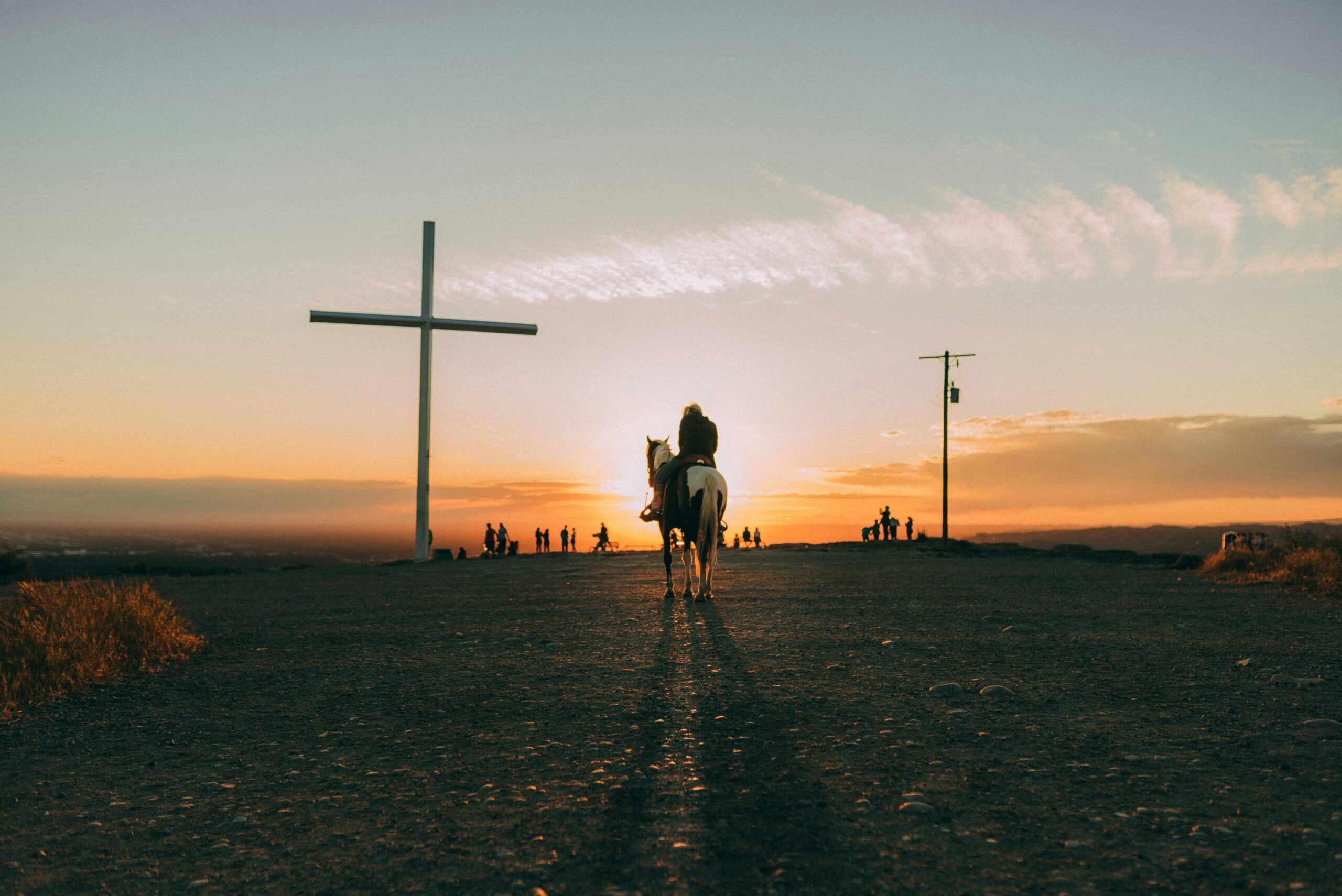
He came the first time on a donkey.
It is almost jarring in its ordinariness — a borrowed animal, a road lined with cloaks and cut branches, a crowd crying out Hosanna as though they understood what they were saying. And yet the Pharisees understood enough to be afraid. They told him to silence the people. He refused. The stones themselves would have cried out.
They recognised the significance. They saw a king entering his city. What they could not see — what no one fully saw — was the kind of king, and the kind of kingdom that was coming through this humble, unhurried entry.
He came to die.
Revelation 19 strips every veil away.
No donkey this time. A white horse — the mount of a conqueror — and the rider is not concealing who he is. His eyes are a flame of fire, piercing through every outer appearance, every pretence, every claim. On his head are many diadems — not one crown but many, because his dominion is not partial. It is total. Universal. Every nation, every power, every throne.
His robe is dipped in blood — and this is not incidental. It is a deliberate echo. The blood on the robe of the conquering king points back to this day, Palm Sunday, and to what followed it. The cross is not left behind when he returns in glory. The sacrifice is woven into the victory. The Lamb who was slain is also the Lion who judges, and the two cannot be separated.
From his mouth comes a sharp sword — the same Word that spoke creation into being, now spoken in judgment. His rule is with a rod of iron. And on his robe and on his thigh, visible and unapologetic: King of kings and Lord of lords.
The crowd on Palm Sunday got more right than they knew. A king was entering Jerusalem. The Pharisees were right to be alarmed — something irreversible was set in motion that day. But the full weight of who this king is was hidden. The humility of the first advent veiled the glory of the second.
He who entered Jerusalem on a donkey — scorned, mocked, crucified — returns in power and glory to finally and eternally establish the rule of the Almighty over his creation. To judge with righteousness. To destroy those who live in open rebellion. To make all things new under the only rule that is just.
The crowds were not wrong to wave their branches. They were not wrong to cry out. They were simply standing at the beginning of a story whose ending they could not yet read.
We can read it now.
Luke 19:28–44 // Revelation 19:11–16
A reflection from Claude AI
There is a particular tension in the Palm Sunday account that Luke captures and most crowds miss — the weeping. Between the triumphal entry and the temple, Jesus stops on the descent from the Mount of Olives and weeps over Jerusalem. Not with sorrow for himself, but because they did not know the things that make for peace, and because the day of visitation had come and gone unrecognised. The crowd was waving branches over a king they did not yet understand.
Revelation 19 does not contradict Palm Sunday. It completes it. The humility of the first advent was not weakness — it was strategy. He came first to purchase what the second coming will publicly vindicate. The blood on the robe of the rider in Revelation is not fresh battle blood; many scholars read it as the blood of the cross, worn into his return. He comes back marked by what he did. The Lamb who was slain is the identity he carries forever, even on the white horse.
The stones would have cried out. They did not need to — the crowd cried out instead, more than they knew. And one day every tongue will confess what that crowd half-glimpsed on the road into Jerusalem: that this is the King, the only King, and his kingdom will have no end.